

Free Textile Recycling: Why “Free” Is Costing the Industry More Than You Think
Free textile recycling offers are flooding the inboxes of fashion brands and retailers across Australia right now. If you’re operating in the industry, chances are you’ve had the email. Or the phone call. Or the pitch deck.
Someone’s offering to take your textile waste off your hands. For free. No collection fees, no processing charges, no awkward conversations about what end-of-life actually costs. Just hand it over, tick your sustainability box, and get back to running your business.
It sounds great. It’s meant to sound great. And that’s exactly why we need to have a conversation about what free textile recycling really means.
Free textile recycling is never actually free
Here’s the uncomfortable question nobody pitching these schemes wants you to ask: if they’re not charging you, who’s paying?
Textile recycling — actual recycling, the kind that keeps materials out of landfill and out of someone else’s country — is expensive. According to the Australian Fashion Council’s National Clothing Product Stewardship Scheme, proper end-of-life processing requires sorting infrastructure, labour, processing technology, quality control, and verifiable downstream markets. None of that is free. None of it is even cheap.
So when an organisation offers free textile recycling at no cost to you, one of two things is happening:
- They’ve found a way to monetise your waste, or
- They’re shipping the problem somewhere else and calling it a solution.
In our experience, it’s almost always both.
What “offshore” really means in free textile recycling schemes
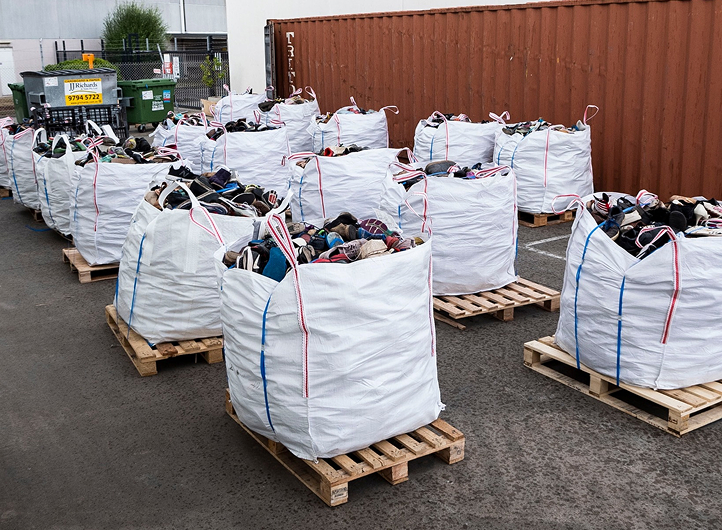
The polite industry term is “export for reuse.” The reality is often less polite. Bales of mixed textile waste leave Australian ports, get sold by weight to overseas brokers, and end up in markets that are already drowning in the world’s discarded clothing. Investigations by the ABC have documented how much of what can’t be sold gets dumped, burned, or buried — frequently in countries with no infrastructure to manage it.
That’s not recycling. That’s relocation. And when it’s dressed up in glossy reports and sustainability language, it’s greenwashing.
If a free textile recycling scheme can’t tell you, in detail, exactly where your textiles end up — which facility, in which country, processed how, into what — then you don’t have a recycling partner. You have someone that is relocating your textiles for you.
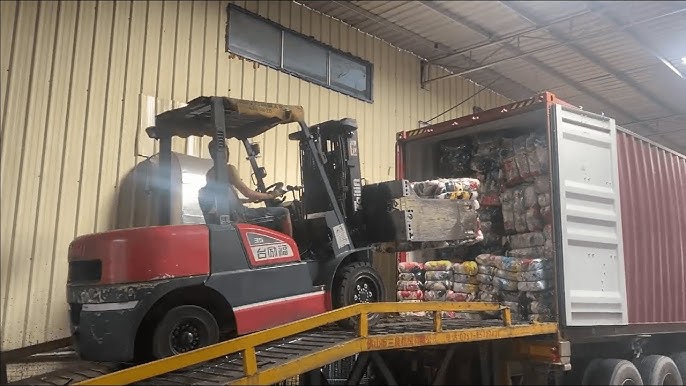
Alt text: Shipping containers loaded with exported waste from free textile recycling collections leaving an Australian port
The questions worth asking about free textile recycling
Before you sign anything, ask:
- Where, specifically, are my textiles processed? Name the facility.
- What percentage is actually recycled into new materials versus downcycled, exported, or landfilled?
- Can I see a full outcome report for materials collected last quarter?
- If you’re not charging me, what is your revenue model?
- Who audits your claims?
If the answers are vague, defensive, or arrive wrapped in buzzwords — that’s your answer.
We charge for textile collection and processing because doing it properly costs money, we process onshore and we can tell you where every kilogram of your textile waste goes, because we handle it ourselves. And every client receives a detailed outcome report — not a marketing summary, an actual breakdown of what happened to their materials. You can read more about our onshore processing approach on our services page.
That’s not a sales pitch. It’s the bare minimum of what accountability in this industry should look like.
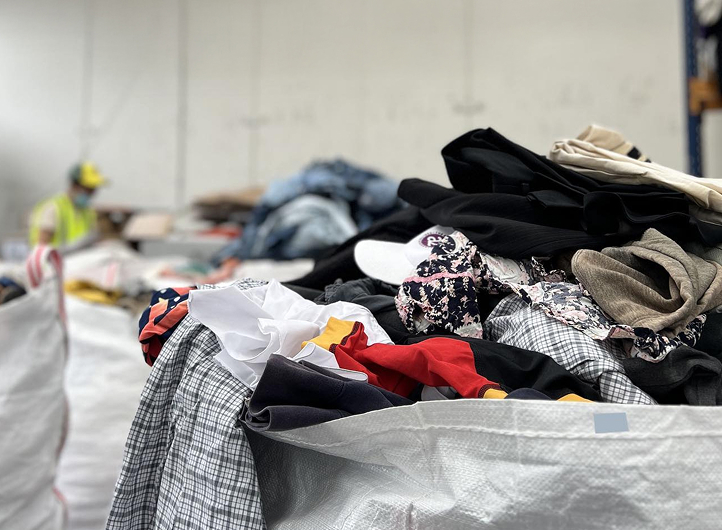
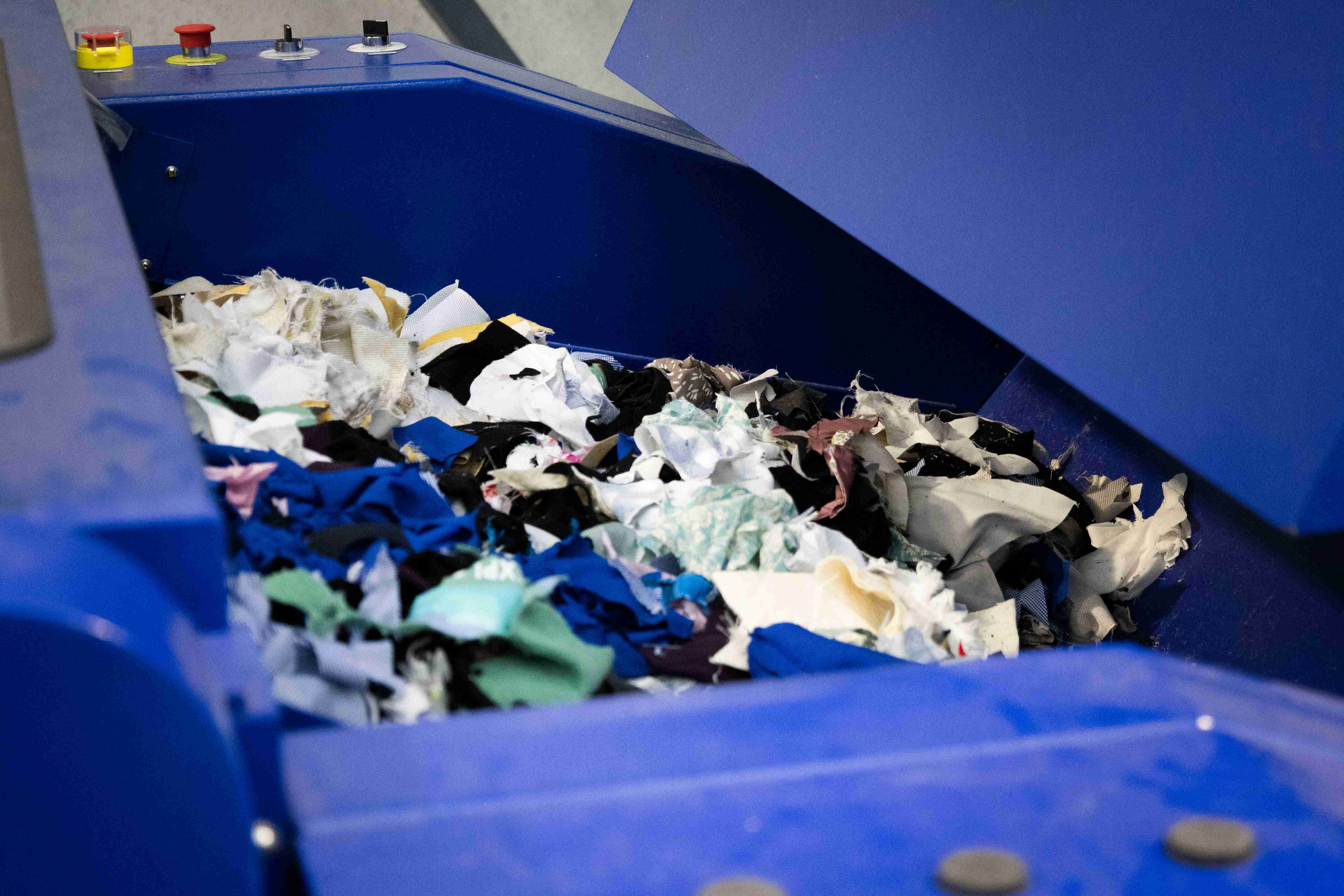
Alt text: Textile recycling being sorted inside a facility UPPAREL’s Cranbourne West facility
The brands we work with aren’t paying us because they have to. They’re paying us because they understand that a sustainability claim you can’t back up with data is a liability waiting to happen — for their brand, their customers, and the environment they say they care about. The ACCC’s greenwashing guidance makes the legal exposure plain.
The conversation we should be having about free textile recycling
The Australian fashion industry is at a turning point. Regulation is coming. Consumer scrutiny is sharpening. And the “free and easy” textile schemes circulating right now are a short-term answer to a long-term problem one that will eventually land back on the brands that signed up for them.
If you’ve been offered a free textile recycling deal that sounds too good to be true, it probably is. And if you’d like to have a real conversation about what proper textile stewardship looks like including what it costs and why we’re here for it.
UPPAREL is Australia’s most transparent and traceable textile recycling facility. We process onshore, we document every kilogram, and we give our clients the receipts to prove it — because real sustainability isn’t a marketing claim, it’s a chain of custody.
Whether you’re a brand looking to do free textile recycling the right way (which, as we’ve covered, isn’t actually free — but it is honest), or an individual with a bag of clothes you want to keep out of landfill, we’d love to hear from you.
For fashion brands and businesses: Book a textile waste audit → Find out exactly what proper, traceable, onshore textile recycling looks like for your operation — and get a tailored outcome plan.
For consumers and households: Book a textile recycling collection → Pack up your unwanted textiles, ship them to UPPAREL where they’ll be processed right here in Australia.
Search
Latest Posts
Ready to  Recycle?
Join thousands of Australians making a difference, one textile at a time.